
Giants at Work: The Top Global Construction Megaprojects — and the Companies Building Them
Across continents and even into orbit, a handful of colossal construction programmes are reshaping infrastructure, cities, and geopolitics. These “megaprojects” are enormous in scale, cost, and complexity — often costing tens to hundreds of billions of dollars and requiring armies of designers, engineers, contractors, financiers, and specialist suppliers. In this expanded 2,000-word report, we explore some of the most significant ongoing or recently active construction projects, the companies driving them forward, and the economic and technological forces shaping their outcomes.
What Makes a Megaproject ‘Mega’?
By definition, megaprojects are large-scale, complex ventures that typically cost a billion dollars or more. They often involve multiple stakeholders including governments, multinational corporations, public agencies, and private investors. They tend to be long-term undertakings, often lasting a decade or more, and demand coordination across disciplines and borders.
The complexity of these projects comes from their technical difficulty, their sheer scale, and the number of moving parts — from supply-chain logistics to environmental permitting. They can be highly politically sensitive, as they affect communities, economies, and even international relations.
Examples range from smart city developments like NEOM in Saudi Arabia, to transportation networks such as the Trans-European Transport Network (TEN-T), to energy projects like China’s massive hydropower developments. These undertakings push the boundaries of engineering, finance, and governance.
NEOM (Saudi Arabia) — A Futuristic City and Industrial Ecosystem
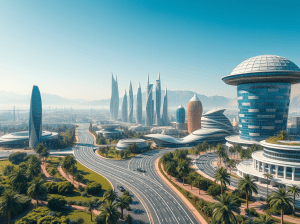
The NEOM project is perhaps the most ambitious urban development initiative in the world today. Envisioned as a futuristic, sustainable, and high-tech urban ecosystem, NEOM encompasses several sub-projects: ‘The Line’, a linear city without cars; ‘TROJENA’, a mountain tourism destination; and ‘Oxagon’, a floating industrial complex. The total estimated investment exceeds $500 billion, financed primarily by Saudi Arabia’s Public Investment Fund (PIF).
Key companies and roles: The NEOM Company, a subsidiary of PIF, is responsible for the overall development and management. Bechtel, a global leader in engineering and project management, has been appointed to oversee infrastructure delivery. Design firms such as AECOM and Foster + Partners have been instrumental in master planning and architectural work. Regional contractors handle civil works, often in joint ventures with international specialists.
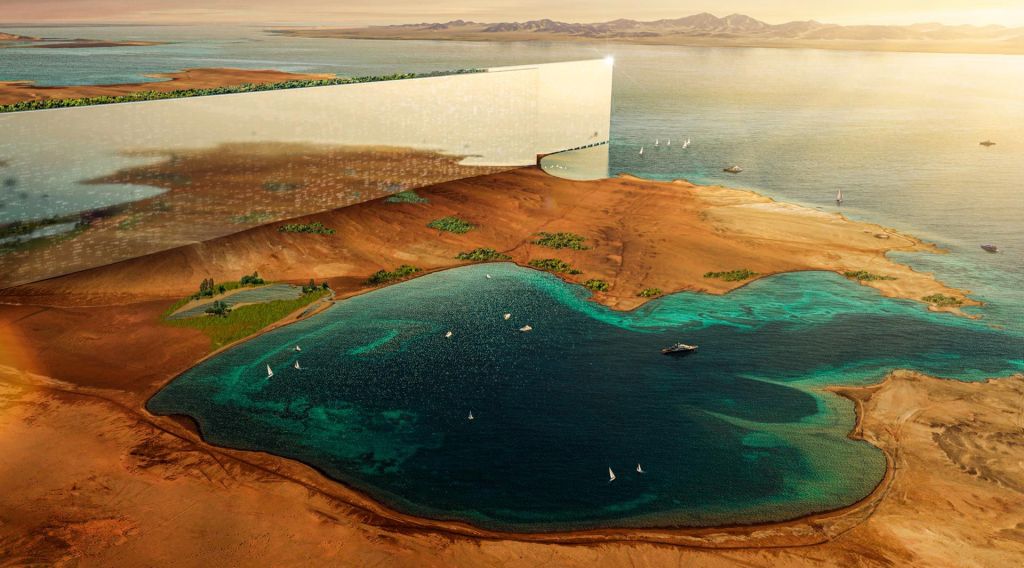
NEOM is designed as a ‘programme of programmes’, meaning it is a collection of interconnected mega-projects, each with its own contractors and timelines. This structure allows for flexibility in awarding packages to global leaders in construction, technology, and sustainability.
Beyond its architectural ambition, NEOM is also a strategic economic move for Saudi Arabia, aiming to diversify its economy away from oil, attract global investment, and position the Kingdom as a leader in green and digital innovation.
*** Link to the companies websites***
TEN-T (Trans-European Transport Network) — Stitching Europe Together
The TEN-T is the European Union’s strategic plan to create an integrated and sustainable transportation network across the continent. The project spans railways, roads, ports, airports, and inland waterways, aiming to improve connectivity, reduce emissions, and enhance economic cohesion between EU member states.
Estimated at over €600 billion in cumulative investment, TEN-T is structured as a series of corridors, each broken down into multiple national and regional projects. This decentralised approach allows work to proceed in parallel across countries.
Key companies and roles: Construction and engineering giants such as Vinci, Strabag, Hochtief, and Ferrovial lead major civil works packages. Systems and signalling come from Siemens Mobility, Alstom, and Thales. Consulting firms coordinate cross-border alignment, environmental studies, and funding applications.
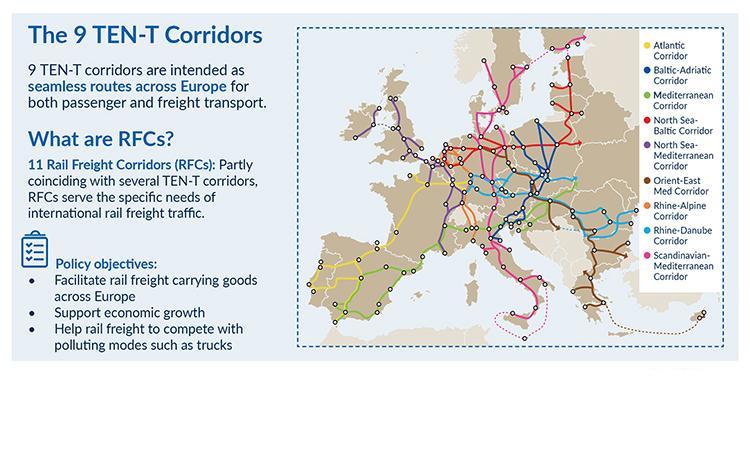
TEN-T’s complexity lies in harmonising technical standards and regulatory frameworks across sovereign nations. This requires not only engineering expertise but also diplomatic skill, as agreements must satisfy multiple governments and stakeholders.
Gulf Railway (GCC Railway) — A Regional Spine for the Gulf
The Gulf Railway is envisioned as a unifying transport corridor for the six GCC countries: Kuwait, Saudi Arabia, Qatar, Bahrain, UAE, and Oman. When completed, it will stretch approximately 2,177 km, linking major cities and ports across the region.
The project is valued at around $250 billion, but unlike a single contract, it is divided into national segments, each funded and managed by its respective government.
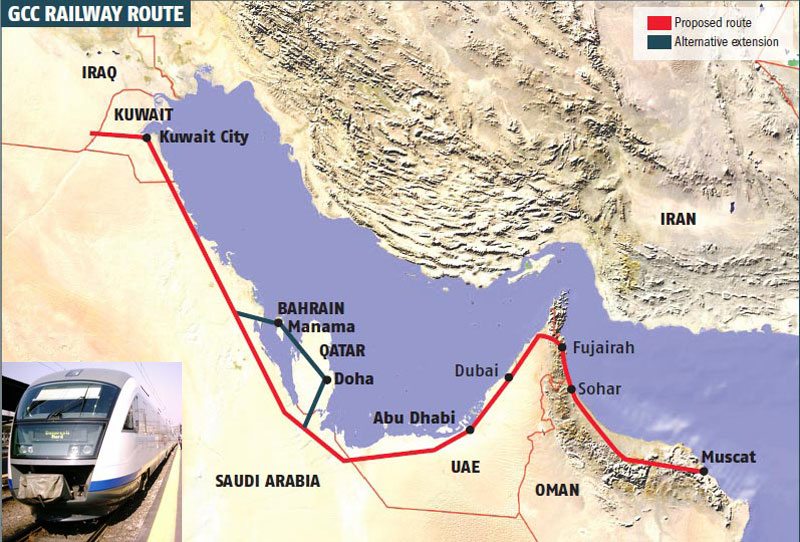
Key companies and roles: China Railway Group, Alstom, Siemens, and regional construction leaders are in competition for various packages, ranging from track laying to station design. Engineering consultants assist in setting common technical standards, a challenge given differing national regulations.
The railway is as much a political project as it is an economic one. It promises to improve trade, tourism, and labour mobility in the region, but it also requires unprecedented cooperation among GCC members.
China’s Yarlung Tsangpo Hydropower Project
China’s proposed hydropower dam on the Yarlung Tsangpo River, in Tibet, is one of the most ambitious energy projects ever conceived. With projected costs exceeding $150 billion, it aims to generate massive amounts of clean electricity while asserting China’s control over a critical waterway.
Key companies and roles: China State Construction Engineering Corporation (CSCEC), PowerChina, and China Three Gorges Corporation will handle civil works, tunnel boring, and installation of turbines and electrical systems.
The project faces environmental and geopolitical concerns, particularly from downstream nations such as India and Bangladesh, which rely on the Brahmaputra River. Engineering challenges include high-altitude construction, seismic risks, and extreme weather conditions.
Other Headline Megaprojects
California High-Speed Rail (USA) — Linking major cities with cutting-edge rolling stock and advanced rail infrastructure.
Jeddah Tower (Saudi Arabia) — Aiming to be the first skyscraper over 1 km tall, with advanced structural engineering and high-performance materials.
Strait of Messina Bridge (Italy) — Set to become the world’s longest suspension bridge, connecting Sicily to mainland Italy.
Qiddiya (Saudi Arabia) — An entertainment and tourism megaproject featuring theme parks, sports facilities, and luxury resorts.
The Companies That Dominate Global Construction
China State Construction Engineering Corporation (CSCEC) — The largest construction group by revenue globally, active across infrastructure, energy, and urban projects. LINK
Vinci, Bouygues, ACS, Ferrovial, Hochtief — European giants with expertise in rail, roads, and complex civil works.
Bechtel, Fluor, Jacobs, Kiewit, AECOM — American-led engineering and project management powerhouses, known for large-scale infrastructure delivery.
Specialist firms — including tunnel-boring machine (TBM) manufacturers, heavy equipment suppliers like Caterpillar and Komatsu, and systems integrators such as Siemens, Alstom, and Thales.
Conclusion
Megaprojects are the ultimate test of organisational, technical, and political capability. From NEOM’s visionary urbanism to TEN-T’s continental reach, and from the orbital assembly of the ISS to the massive hydropower ambitions in China, these ventures showcase what humanity can achieve when ambition meets expertise.
Success in such projects demands not only scale but also an ability to integrate multidisciplinary skills, manage risk, and adapt to evolving challenges. As the next generation of megaprojects emerge — from green hydrogen plants to intercontinental transport corridors — the companies that can combine innovation, financial strength, and partnership models will be the ones that shape our built environment for decades to come.

 Civil Insight
Leave a comment