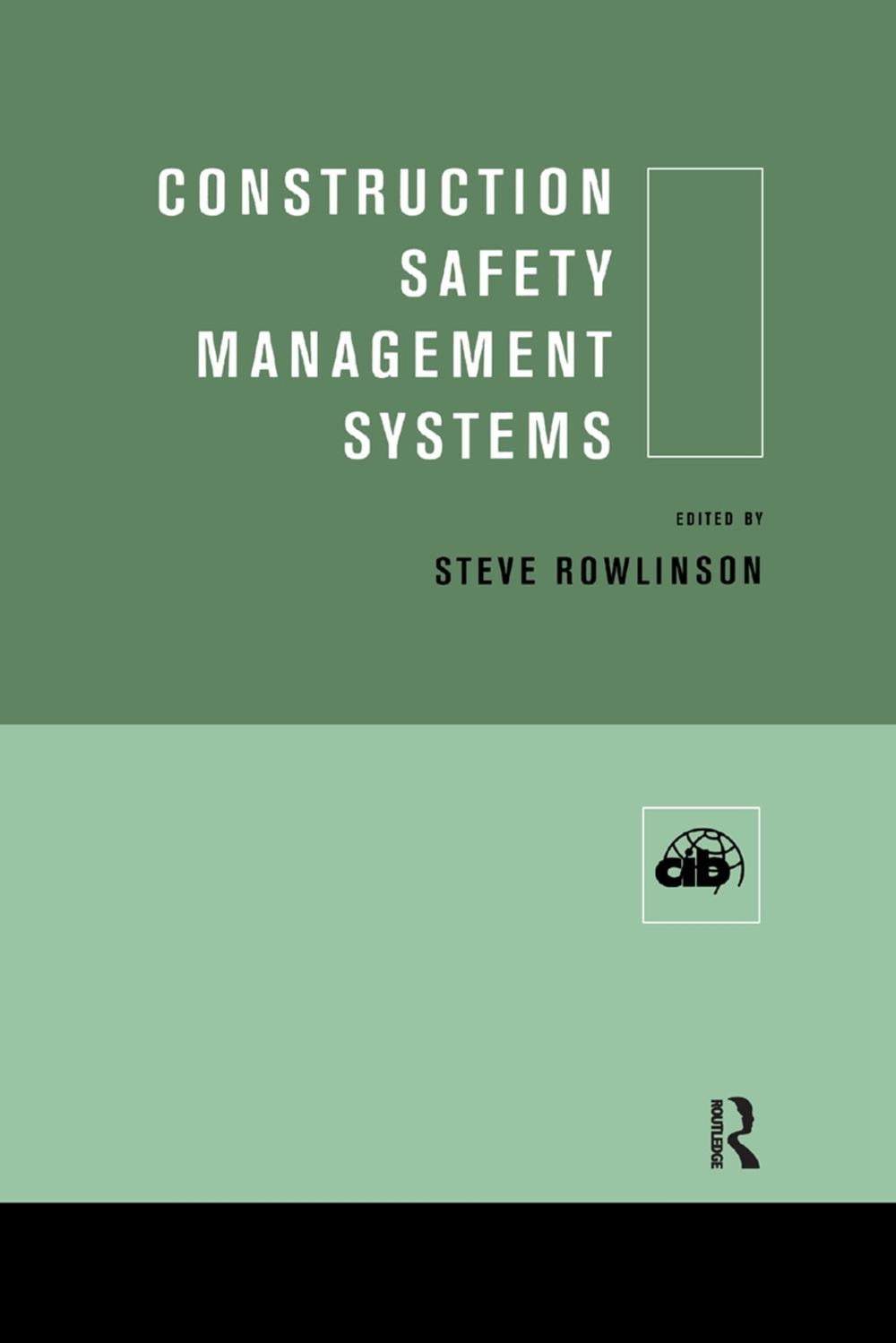
A construction site can have a full set of safety procedures and still expose people to serious hazards. The gap between procedures and on-site decisions is central to Construction Safety Management Systems, edited by Steve Rowlinson. This international research collection helps Australian construction professionals connect design, management, training and safety culture rather than rely on checklists alone.
What the book covers
The publisher identifies six major sections: international comparisons; safety management issues; health issues; training and education; safety technology; and accident analysis. The book originated in research associated with the CIB W099 international construction safety and health community. This breadth challenges reliance on incident counts and signed forms as measures of safety.
The detailed contents available through booksellers name chapters addressing societal influences on safety culture, comparisons between countries, safety management systems, safety climate and performance measurement, management attitudes, and the relationship between partnering and safety. These are verified subjects in the published contents, not claims about the results of individual studies.
The most useful lesson: a system must work in practice
A safety management system is only useful when it influences the conditions under which work is planned and executed. Consider a bridge-bearing replacement or a congested tunnel fit-out. A procedure might require a lifting plan, exclusion zone and pre-start briefing. Yet if the work area changes, access becomes restricted or another subcontractor enters the same space, the original controls need reassessment. The managerial question is whether the organisation has created a reliable mechanism to recognise and act on such changes.
This example is an editorial application of the book’s subject matter, not a case study claimed to appear in the text. It illustrates why supervisors and engineers should assess whether planning, communication and resources support safe execution, rather than assuming that completed paperwork proves effective risk control.
Strengths for construction professionals
The international research perspective is a strength. Comparisons across regulatory and cultural environments reveal assumptions a site manual may overlook. Health, education and accident analysis also broaden the focus beyond immediate hazards.
The chapter topics on safety culture and performance measurement are especially relevant to project leaders. A low reported incident count can coexist with unresolved high-consequence risks. Managers therefore need leading information about the quality of controls, worker concerns, changes to planned methods and close-out of corrective actions.
Limitations and Australian context
The principal limitation is age. The original collection dates to 2004, while the paperback identified here was issued in 2019. Readers must not treat its discussion of law, technology or industry practice as a current statement of Australian obligations. Work health and safety duties, applicable state legislation, current codes of practice, client requirements and site-specific risk assessments remain the operative references.
Its research-conference origins are another consideration. An edited volume may offer different perspectives and levels of detail across chapters, rather than the consistent sequence of a practical training manual. Readers seeking step-by-step instructions for preparing a SWMS, conducting a lift or selecting temporary works controls will need contemporary Australian guidance. The publisher description and available contents support an assessment of the book’s scope, but not a claim that every individual chapter has been read or independently validated.
Three ways to apply the ideas on site
First, check whether planned high-risk activities are genuinely ready. Before a lift, excavation or concrete pour, confirm that the approved method, relevant permits, worker competencies and site conditions still align. Escalate gaps to the responsible team rather than treating an earlier sign-off as proof that circumstances have not changed.
Second, strengthen the feedback loop. Record not only incidents but also repeated access conflicts, late changes to work methods, failed isolations and unresolved worker concerns. Assign owners and check whether the corrective action actually changes the work environment. Do not confuse a closed action register with verified effectiveness.
Third, test the quality of safety conversations. A pre-start should provide an opportunity for workers to challenge assumptions and report changes. If the meeting merely repeats yesterday’s instructions, it is unlikely to reveal emerging risks. Leaders should make it possible to stop or redesign an activity when the controls are no longer adequate.
Verdict: worth reading?
For safety advisers, project managers, site engineers and construction leaders interested in why safety systems succeed or fail, Construction Safety Management Systems is a useful research-oriented reference. It is less suitable as a first or only safety text for a graduate engineer. Its enduring contribution is the reminder that safe construction depends on decisions, relationships and organisational conditions as much as on procedures. Read it critically alongside current Australian guidance and test its themes against the realities of your own project.
Bibliographic reference and review basis
Rowlinson, S. (ed.) (2004), Construction Safety Management Systems, first edition, Routledge, 500 pages. Reviewed format: 2019 paperback reissue, ISBN 9780367394189. The original research collection is copyright 2004; the paperback listing gives 16 September 2019 as its publication date.
Sources: Routledge official edition description and contents; Bokus paperback bibliographic record; Detailed contents for the original hardback edition. This review uses legitimately accessible publisher descriptions and contents rather than claiming access to the complete chapters. No exact-edition Amazon listing was verified.
Featured image: front cover of Construction Safety Management Systems (2019 paperback reissue, ISBN 9780367394189), © Routledge / Taylor & Francis. Cover sourced from The Nile book listing; displayed for identification in this critical book review.